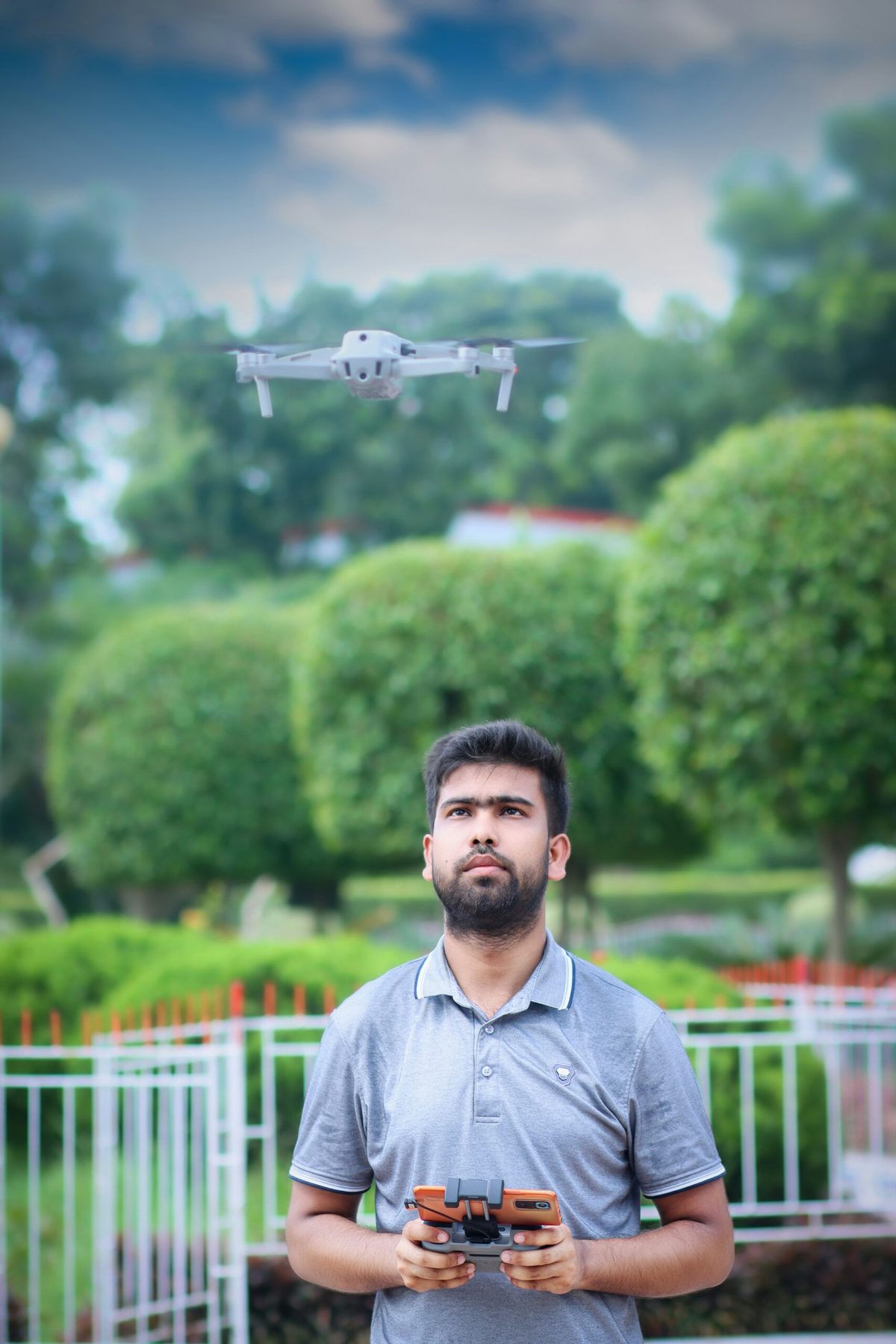
For a first drone, choose a sub-250 g model with obstacle sensing and a Fly More-style kit with extra batteries. Light weight keeps you in the simplest regulatory class in most countries, sensing forgives beginner mistakes, and spare batteries turn short flights into real practice time.
Your first drone should do three things: stay in the air without drama, come home when you panic, and shoot video you actually want to keep. Everything else — range records, 8K photos, cinematic color profiles — is noise until you have ten flights behind you.
This guide ranks 15 beginner drones on the specs that decide whether your first month of flying is fun or frustrating: flight time per battery, camera quality, obstacle sensing, weight class, and what the kit in the box actually includes. Every pick below is a real, currently sold model with verified specifications — no prototypes, no discontinued hardware, no sponsored placements.
One honest note before the list: we research these drones from manufacturer specifications, documentation, owner communities and long-term reliability reports. We do not claim to have crash-tested every unit ourselves, and where a recommendation rests on published specs rather than bench time, we say so. Our full method is on the How We Test page.
How to choose your first drone
Weight first. Drones under 250 g sit in the lightest regulatory class in most countries, which is why almost every pick below is a sub-250 g model. Heavier drones are not worse — they are often better cameras — but they come with registration and rule homework that a beginner does not need on day one.
Obstacle sensing second. A drone that sees a tree and stops is worth more to a beginner than a bigger sensor. The picks with omnidirectional sensing (Mini 5 Pro, Mini 4 Pro, Air 3) forgive the mistakes every new pilot makes; the picks without it demand more care and more space.
Batteries third. A 30-minute flight time sounds generous until you subtract takeoff, positioning and the return journey — real shooting time is closer to 20 minutes. A Fly More Combo with three batteries triples your practice time per outing, which is why so many of our picks are combos.
DJI Mini 5 Pro
Best overall
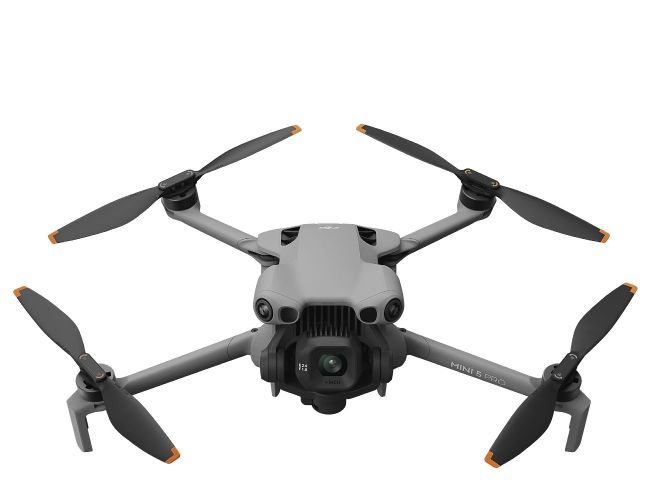
The Mini 5 Pro is the most capable small drone DJI has made, and it is also the most forgiving. The 1-inch sensor is a genuine step up in low light — sunset flights and shaded valleys keep detail that smaller sensors smear away — and the omnidirectional sensing plus LiDAR-assisted night obstacle detection give a new pilot a wide safety margin. It is the one pick on this list that a beginner will not outgrow in a season.
Pros
- 1-inch sensor, best in class
- Omnidirectional + LiDAR sensing
- ActiveTrack 360° follows well
Cons
- Priciest Mini yet
- Heavier than older Minis
Key specs
| Flight time | 36 min |
| Camera | 4K HDR |
| Sensor | 1-inch CMOS |
| Video | 4K/60fps |
| Range | 20 km |
| Obstacle sensing | Omnidirectional |
| Weight | 249 g |
Our pick
DJI Mini 5 Pro
DJI's newest sub-250 g flagship: a 1-inch sensor, omnidirectional sensing and ActiveTrack 360° in a jacket-pocket drone.
Pairs well with
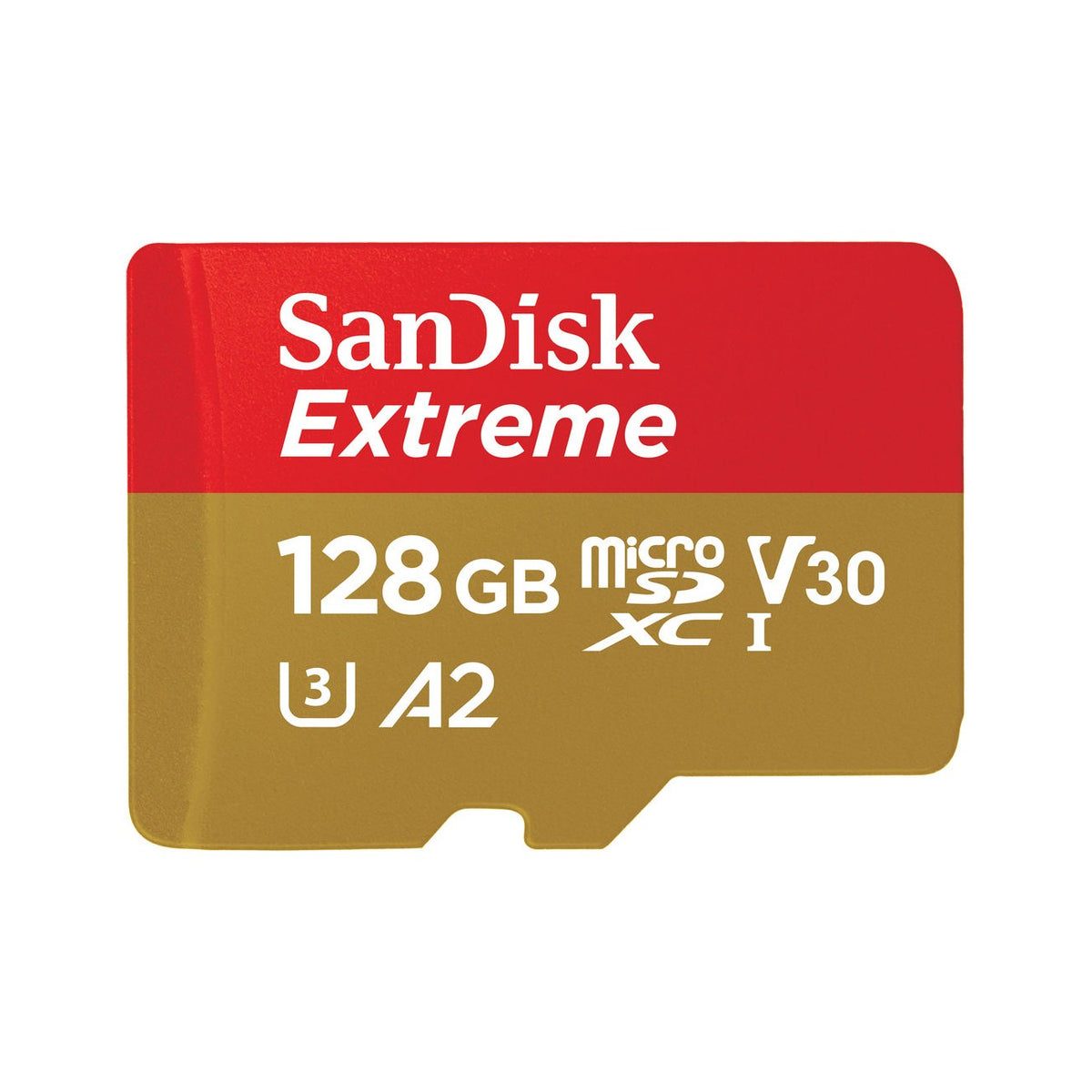
SanDisk Extreme 128GB microSDXC
The card most drone pilots actually use: V30-rated for 4K video, fast enough to never drop a frame, 128 GB holds hours of footage.
DJI Mini 4 Pro (RC 2)
Best all-rounder
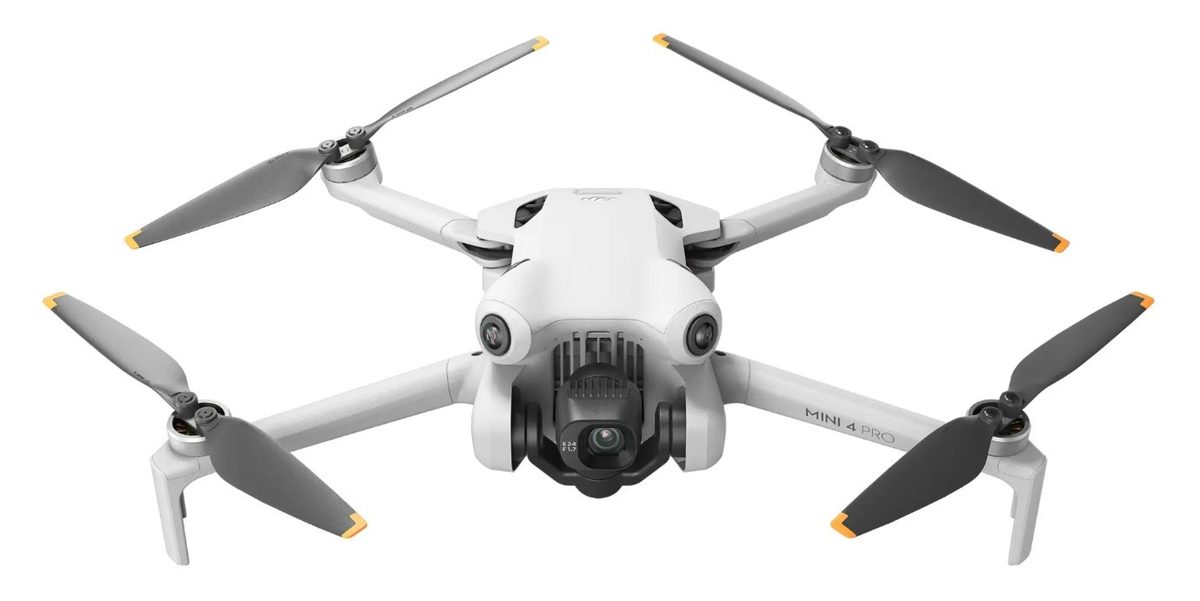
The Mini 4 Pro is the drone we recommend most often, and the reason is simple: it removes the two things that ruin a beginner's first month — crashes and fiddly setup. Omnidirectional obstacle sensing watches every direction, the RC 2 controller has its screen built in so there is no phone mount to fight with, and the 4K/60 HDR footage holds up on a big screen. It costs more than the entry Minis, but it is the cheapest drone here that feels like a serious camera.
Pros
- Omnidirectional sensing
- Screen controller included
- 4K/60 HDR video
Cons
- Above the $500 line
- Small sensor in very low light
Key specs
| Flight time | 34 min |
| Camera | 4K/60fps HDR |
| Sensor | 1/1.3-inch CMOS |
| Video | 4K/60fps HDR |
| Range | 20 km |
| Obstacle sensing | Omnidirectional |
| Weight | 249 g |
Our pick
DJI Mini 4 Pro (RC 2)
The sweet spot of the Mini line: 4K/60 HDR, omnidirectional sensing and a screen controller, still under 249 g.
Pairs well with
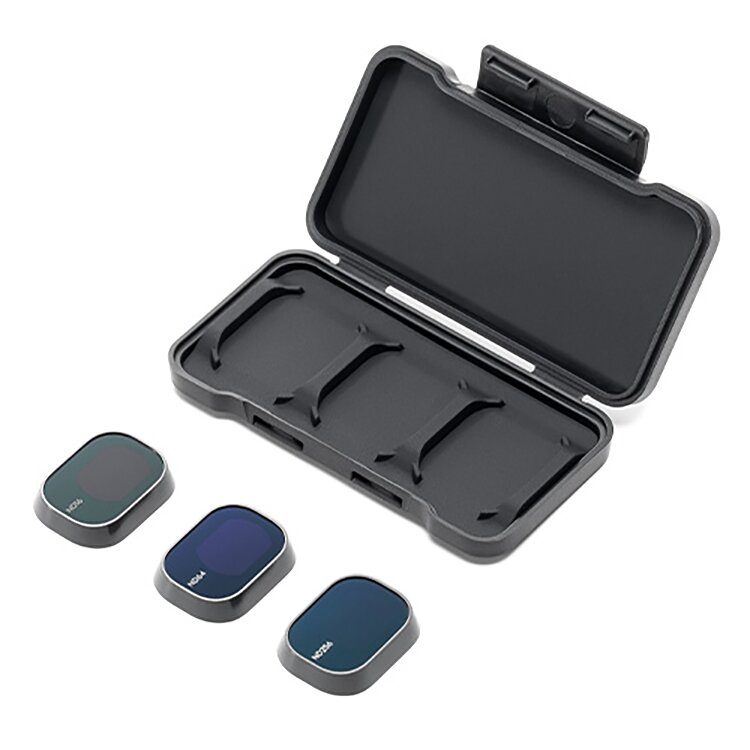
DJI Mini 4 Pro ND Filters Set (ND16/64/256)
DJI's own ND set for the Mini 4 Pro: three densities for shutter-speed control and real cinematic motion blur.
DJI Mini 4K
Best budget 4K
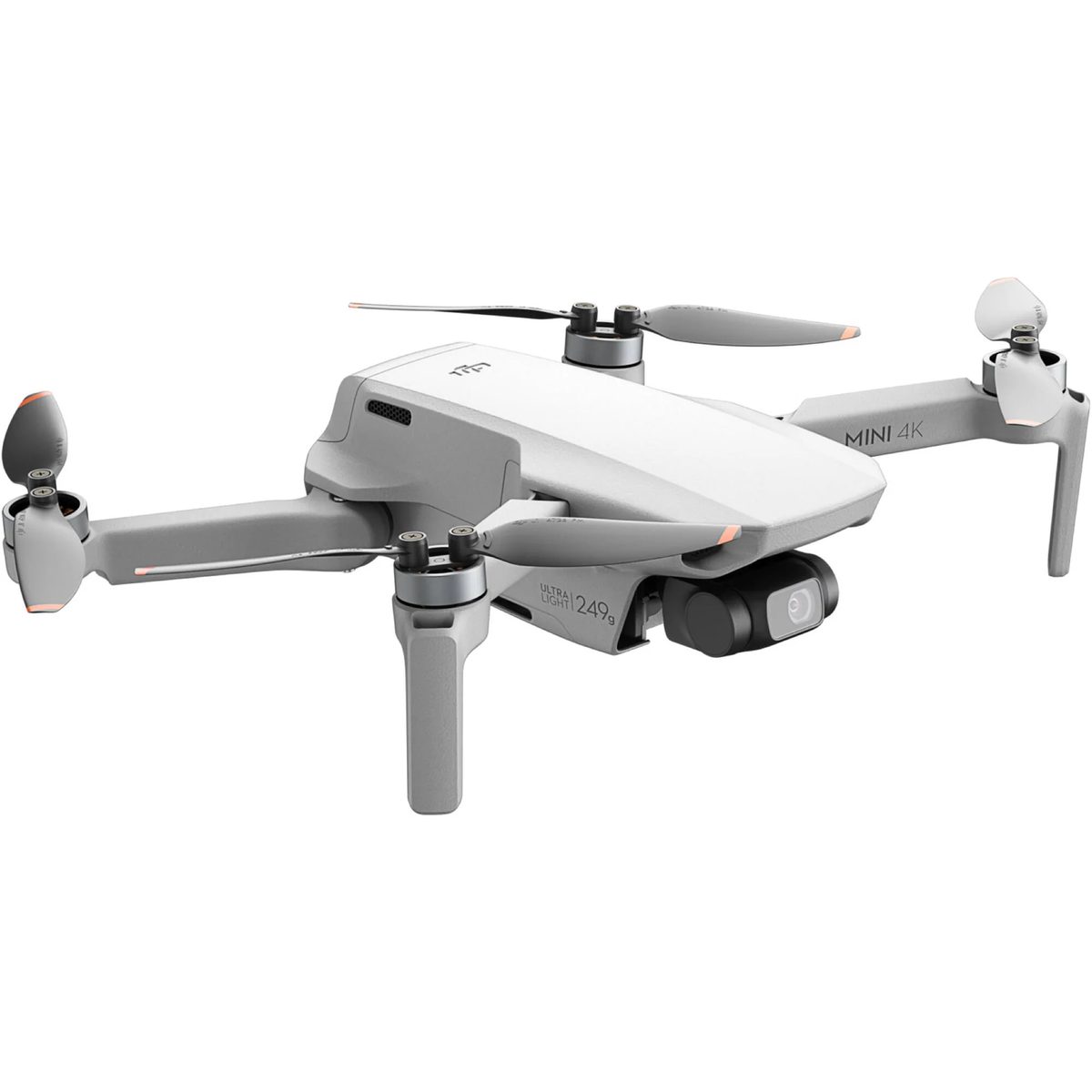
The Mini 4K is last generation's airframe with a 4K camera bolted on, and that is exactly why it is such a good first drone: every weakness is known, every accessory is cheap, and the flight experience is the same stable, predictable DJI feel that made the Mini 2 a classic. Video is 4K/30 with a 3-axis gimbal, which is genuinely smooth — the smaller 1/2.3-inch sensor is the real compromise, and it shows first in low light. For daylight flying and learning the sticks, it is hard to beat at this price.
Pros
- Lowest-price DJI 4K
- Proven, reliable airframe
- Huge accessory market
Cons
- Smaller sensor, weak in low light
- No obstacle sensing
Key specs
| Flight time | 31 min |
| Camera | 4K |
| Sensor | 1/2.3-inch CMOS |
| Video | 4K/30fps |
| Range | 10 km |
| Obstacle sensing | Downward only |
| Weight | 249 g |
Our pick
DJI Mini 4K
The cheapest way into a real 3-axis-gimbal 4K DJI: proven Mini 2 hardware with a 4K camera, under 249 g.
Pairs well with
SanDisk Extreme 128GB microSDXC
The card most drone pilots actually use: V30-rated for 4K video, fast enough to never drop a frame, 128 GB holds hours of footage.
DJI Mini 2 SE
Cheapest DJI
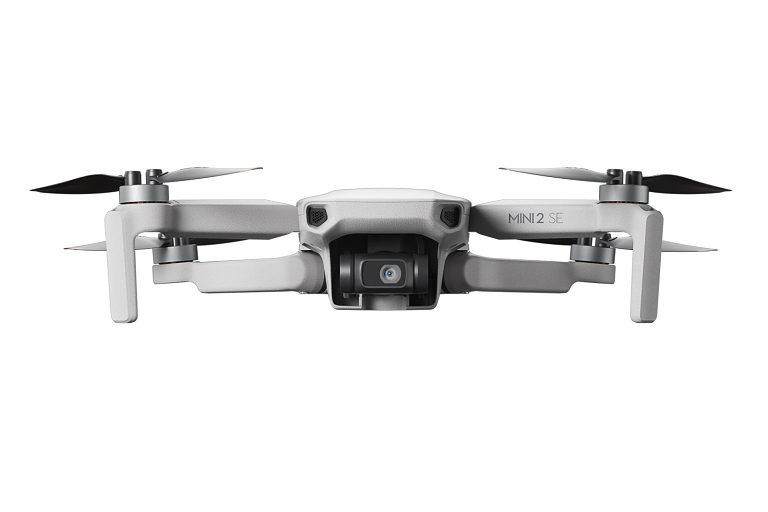
The Mini 2 SE exists for one buyer: someone who wants to learn to fly properly without spending 4K money. It has the same flight controller, wind resistance and GPS return-to-home as its pricier siblings — the only real sacrifice is the camera, which records 2.7K instead of 4K. On a phone screen, honestly, most people will not notice. If your budget is tight and your goal is learning, this is the sensible buy; spend the money you save on a second battery.
Pros
- Cheapest DJI with a gimbal
- Same flight feel as pricier Minis
- Great learner drone
Cons
- 2.7K video, not 4K
- No obstacle sensing
Key specs
| Flight time | 31 min |
| Camera | 2.7K QHD |
| Sensor | 1/2.3-inch CMOS |
| Video | 2.7K/30fps |
| Range | 10 km |
| Obstacle sensing | Downward only |
| Weight | 249 g |
Our pick
DJI Mini 2 SE
The starter drone, full stop: DJI stability and a 3-axis gimbal for the lowest price in the range. Video tops out at 2.7K.
Pairs well with
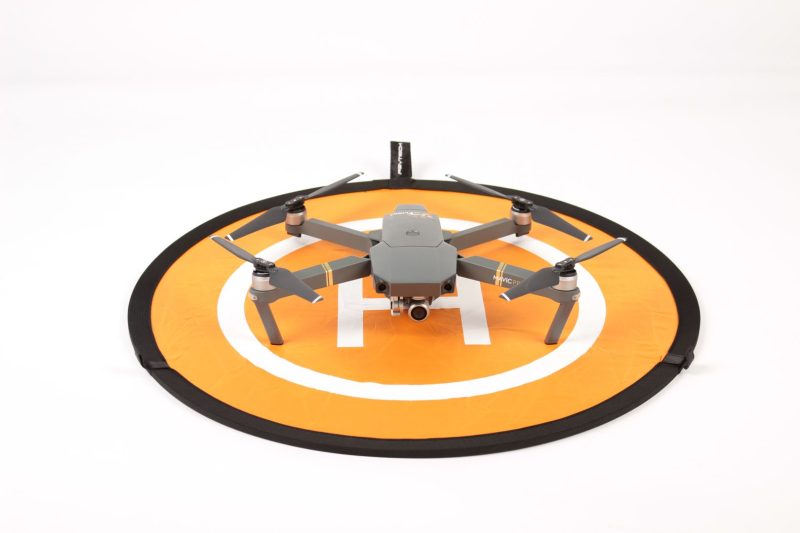
PGYTECH Landing Pad (75 cm)
A foldable 75 cm pad with a high-visibility H: clean takeoffs from grass, sand and gravel, and a clear landing target.
DJI Mini 3
Best flight time
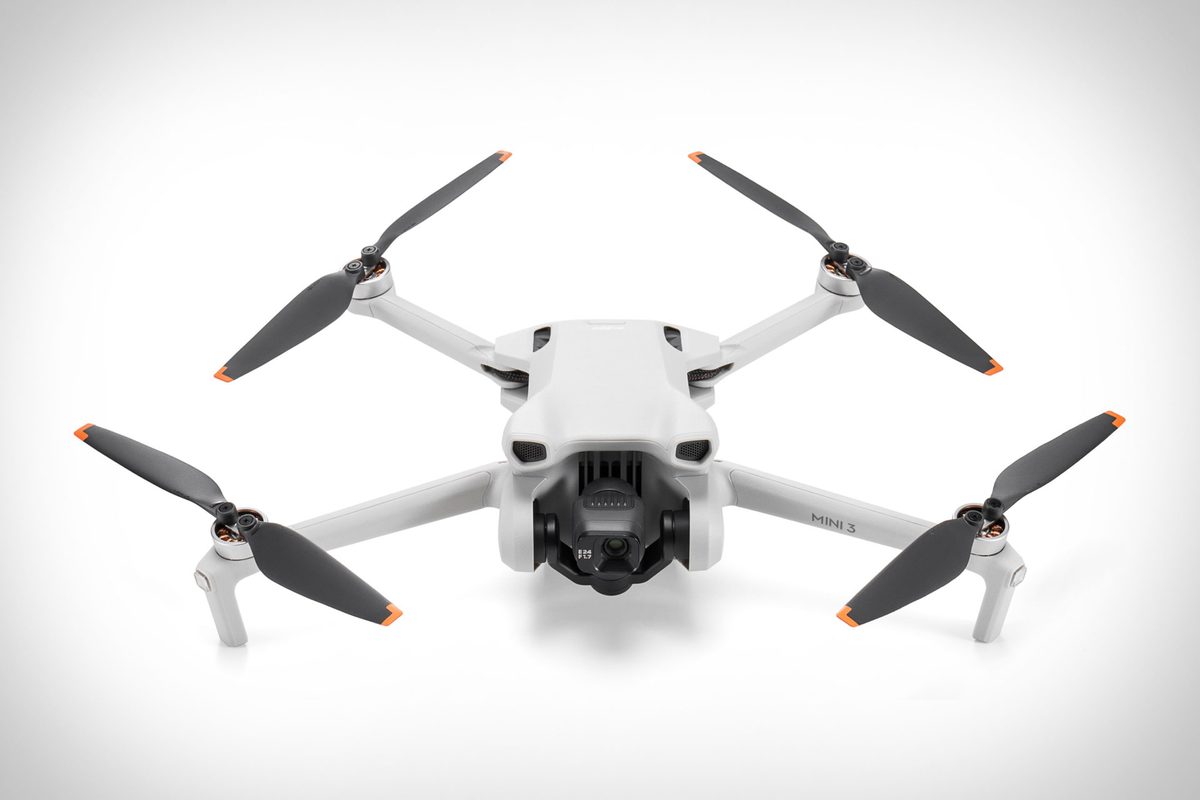
The Mini 3 is the quiet value pick of the whole DJI range. It shares the 1/1.3-inch sensor and 4K HDR camera of the more expensive Minis, flies longer on a single battery than any of them — 38 minutes rated — and its rotating gimbal shoots true vertical video without cropping, which matters if your footage ends up on a phone screen. What you give up is obstacle sensing in every direction but down, so it rewards a careful pilot and punishes a careless one.
Pros
- Longest flight time here
- True vertical shooting
- Same sensor as the Pro Minis
Cons
- No side/front sensing
- Phone controller in base kit
Key specs
| Flight time | 38 min |
| Camera | 4K HDR |
| Sensor | 1/1.3-inch CMOS |
| Video | 4K/30fps HDR |
| Range | 10 km |
| Obstacle sensing | Downward only |
| Weight | 249 g |
Our pick
DJI Mini 3
The long-flight Mini: 38 minutes per battery, true vertical shooting, and the same 1/1.3-inch sensor as the Pro models.
Pairs well with
SanDisk Extreme 128GB microSDXC
The card most drone pilots actually use: V30-rated for 4K video, fast enough to never drop a frame, 128 GB holds hours of footage.
DJI Neo
Best selfie drone
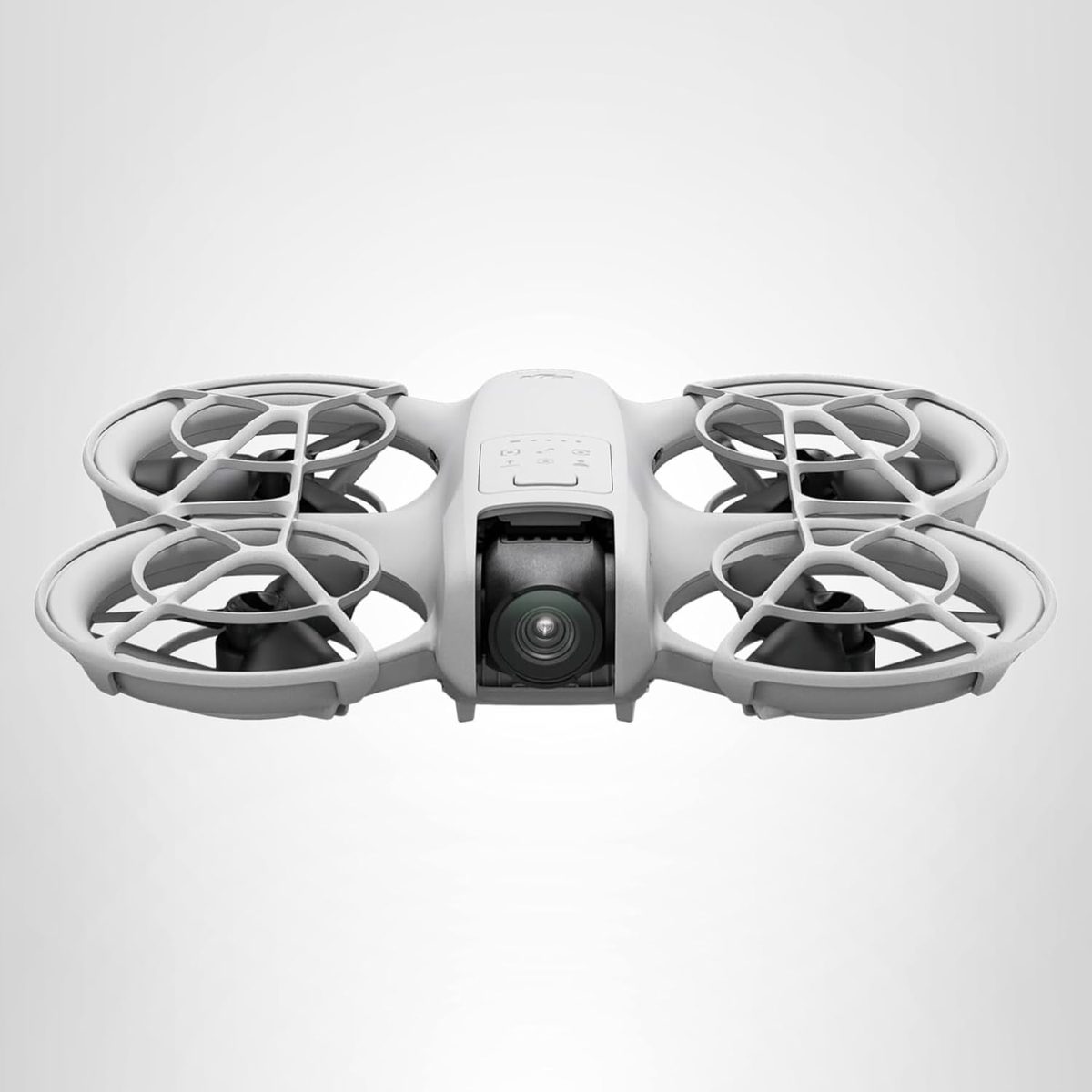
The Neo is the least drone-like drone DJI sells, and that is the point. At 135 g with full propeller guards it takes off from your palm, follows you on a run or a ride, and lands back in your hand — no controller, no setup, no learning curve. The trade-offs are real: about 18 minutes of flight, a small sensor, and it struggles in wind that a Mini shrugs off. Buy it as a flying camera for yourself, not as a first piloting drone.
Pros
- Flies with no controller
- 135 g, fully guarded
- Best selfie/tracking modes
Cons
- Short 18-min flights
- Weak in wind
Key specs
| Flight time | 18 min |
| Camera | 4K |
| Sensor | 1/2-inch CMOS |
| Video | 4K/30fps |
| Range | App / RC |
| Obstacle sensing | Downward only |
| Weight | 135 g |
Our pick
DJI Neo
A 135 g selfie drone that takes off from your palm, follows you, and needs no controller at all.
Pairs well with
DJI Neo Three-Battery Combo
Neo with three batteries and a two-way charging hub — the 18-minute flight time stops being a problem.
DJI Flip (RC-N3)
Safest to fly
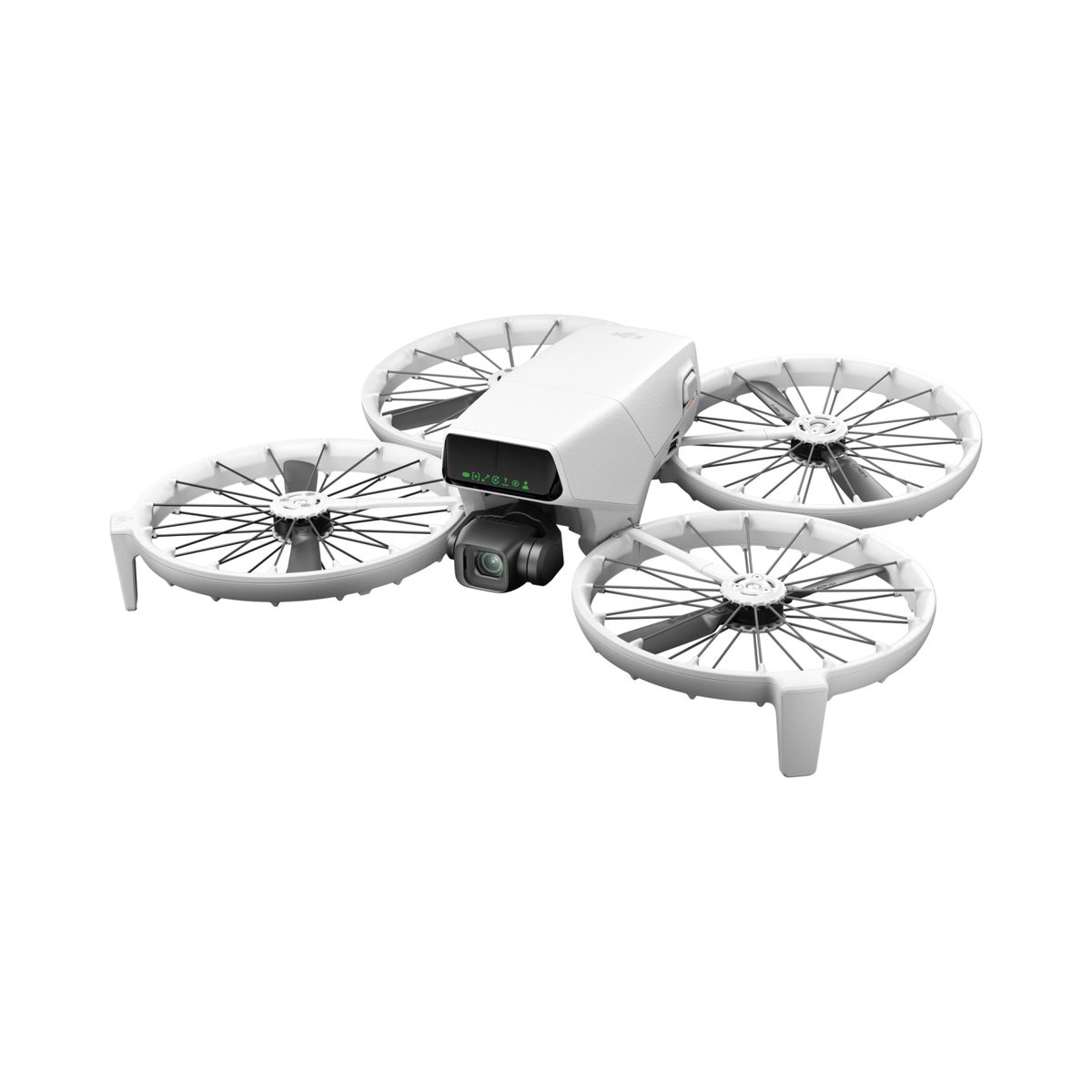
The Flip is DJI's answer to the question every beginner actually asks: what happens when I hit something? Its folding full-coverage propeller guards mean a brush with a branch or a wall is usually a non-event, and it can take off from your palm like the Neo. Underneath the friendly design is a serious camera — the same 1/1.3-inch sensor class as the Air 3's wide camera, shooting 4K/60 HDR — so the footage is far better than the toy-like looks suggest. The gap is sensing: forward and down only, no side or rear coverage.
Pros
- Full prop guards standard
- Palm takeoff, no controller needed
- 4K/60 HDR, big sensor
Cons
- No side/rear sensing
- Guards add bulk in the bag
Key specs
| Flight time | 31 min |
| Camera | 4K/60fps HDR |
| Sensor | 1/1.3-inch CMOS |
| Video | 4K/60fps HDR |
| Range | 13 km |
| Obstacle sensing | Forward + downward |
| Weight | 249 g |
Our pick
DJI Flip (RC-N3)
The safe one: full-coverage folding propeller guards, palm takeoff, and a 1/1.3-inch sensor that shoots 4K/60 HDR.
Pairs well with
PGYTECH Landing Pad (75 cm)
A foldable 75 cm pad with a high-visibility H: clean takeoffs from grass, sand and gravel, and a clear landing target.
Potensic ATOM
Best non-DJI
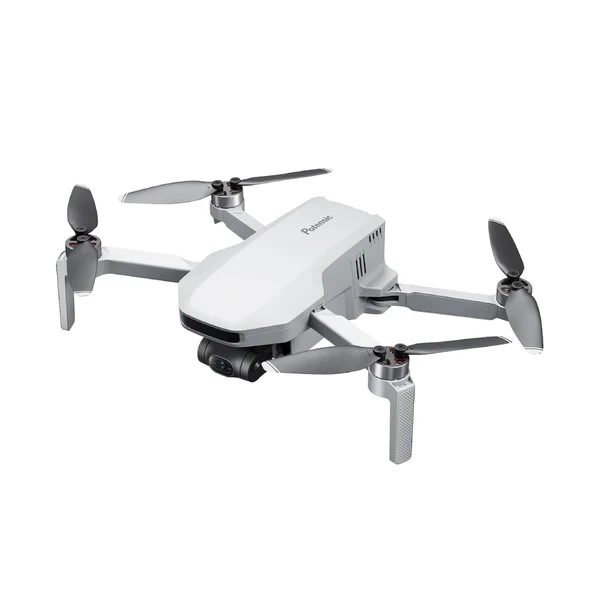
The ATOM is the strongest non-DJI challenger to the Mini line, because it copies what matters: a genuine 3-axis mechanical gimbal, a Sony CMOS sensor shooting 4K/30, and a 249 g folding body. Where it falls behind DJI is the ecosystem — transmission range is 6 km rather than 10, the app is less polished, and spare parts are harder to find. But the footage itself is legitimately good, and the price undercuts the equivalent Mini by a clear margin. It is the right pick if you want DJI-style video without the DJI price.
Pros
- Real 3-axis gimbal
- Sony sensor, good 4K
- Undercuts the Mini on price
Cons
- 6 km range, not 10
- Smaller accessory ecosystem
Key specs
| Flight time | 32 min |
| Camera | 4K/30fps |
| Sensor | Sony CMOS, 12MP |
| Video | 4K/30fps |
| Range | 6 km |
| Obstacle sensing | Downward only |
| Weight | 249 g |
Our pick
Potensic ATOM
Potensic's Mini rival: a real 3-axis gimbal, 4K/30 and a Sony sensor in a 249 g folding frame.
Pairs well with
SanDisk Extreme 128GB microSDXC
The card most drone pilots actually use: V30-rated for 4K video, fast enough to never drop a frame, 128 GB holds hours of footage.
Potensic ATOM 2 Fly More Combo
Best non-DJI upgrade
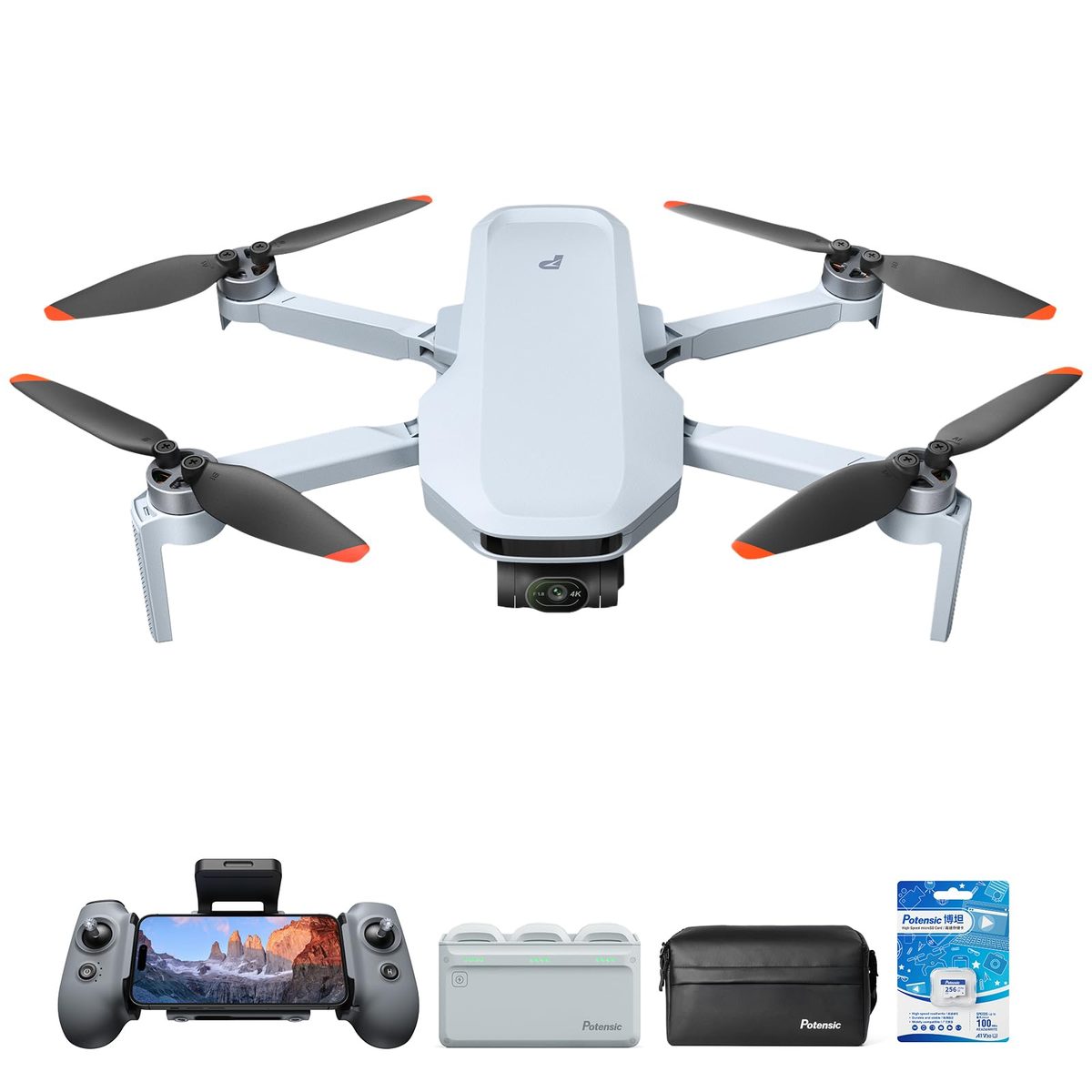
The ATOM 2 closes most of the gap to DJI in one generation. Transmission jumps to 10 km, video moves to 4K HDR, photos to 48MP 8K, and AI subject tracking plus vertical shooting arrive — the feature list reads like a Mini 3's, at a lower price. The Fly More Combo's three batteries give 96 minutes of rated flight, and the parallel charging hub refills all three at once. The remaining gap is polish: DJI's app, obstacle sensing and resale value are still ahead. But as a flying camera, the ATOM 2 is the real deal.
Pros
- 4K HDR + 8K photos
- 10 km range, AI tracking
- 3 batteries, parallel charging
Cons
- No obstacle sensing
- App less polished than DJI
Key specs
| Flight time | 32 min × 3 batteries |
| Camera | 4K HDR, 8K photo |
| Sensor | 48MP |
| Video | 4K HDR |
| Range | 10 km |
| Obstacle sensing | Downward only |
| Weight | 249 g |
Our pick
Potensic ATOM 2 Fly More Combo
The ATOM, grown up: 4K HDR video, 8K photos, 10 km range and AI tracking — three batteries in the box.
Pairs well with
PGYTECH Landing Pad (75 cm)
A foldable 75 cm pad with a high-visibility H: clean takeoffs from grass, sand and gravel, and a clear landing target.
Holy Stone HS720E
Best budget GPS drone
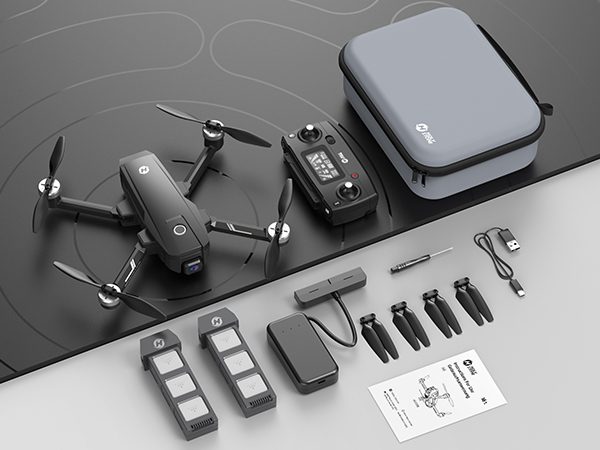
The HS720E is the best-known non-DJI beginner drone for a reason: it ships with two batteries, a carrying case and GPS features — follow-me, return-to-home, waypoint flight — that cost far more in DJI's range. The honest caveat is the camera: electronic stabilization is not a mechanical gimbal, so footage in wind or during fast moves is shakier than any Mini's, and the app experience is rougher around the edges. If your budget is fixed and you want the most drone for the money, it is a fair buy. If video quality is the priority, save for a Mini.
Pros
- Two batteries + case included
- GPS follow-me and waypoints
- Lowest price here
Cons
- EIS, not a mechanical gimbal
- Rougher app experience
Key specs
| Flight time | 46 min (2 batteries) |
| Camera | 4K EIS |
| Video | 4K/30fps |
| Range | 5GHz FPV |
| Obstacle sensing | None |
| Weight | Over 250 g |
Our pick
Holy Stone HS720E
The non-DJI value pick: 4K with electronic stabilization, GPS return-to-home and two batteries in the box.
Pairs well with
SanDisk Extreme 128GB microSDXC
The card most drone pilots actually use: V30-rated for 4K video, fast enough to never drop a frame, 128 GB holds hours of footage.
DJI Mini 4 Pro Fly More Combo
Best Fly More kit
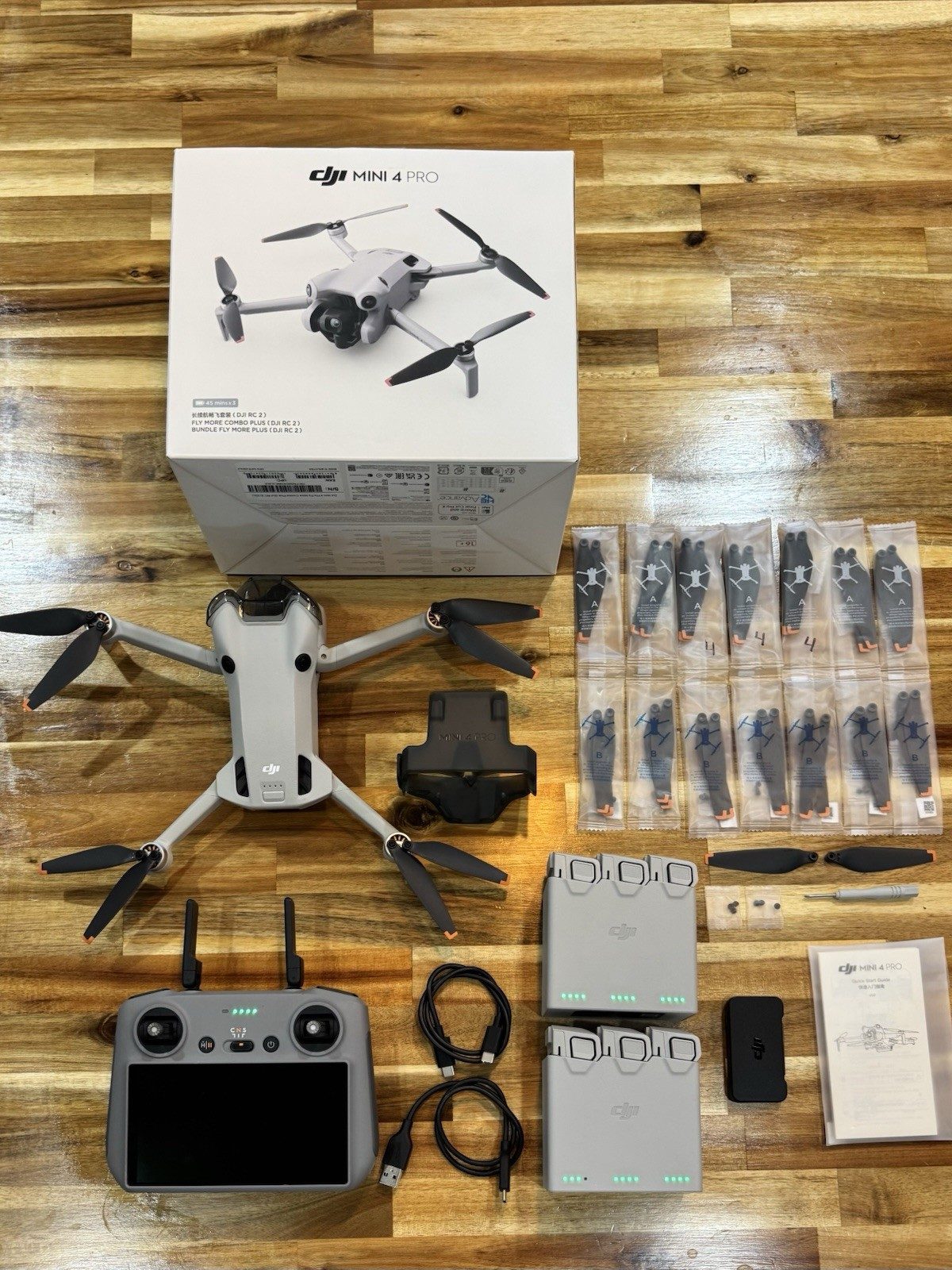
The Mini 4 Pro is the drone we recommend most often, and the reason is simple: it removes the two things that ruin a beginner's first month — crashes and fiddly setup. Omnidirectional obstacle sensing watches every direction, the RC 2 controller has its screen built in so there is no phone mount to fight with, and the 4K/60 HDR footage holds up on a big screen. It costs more than the entry Minis, but it is the cheapest drone here that feels like a serious camera. The Fly More Combo adds extra batteries, a charging hub and a carry bag, so you spend more time flying and less time waiting on a charger.
Pros
- Omnidirectional sensing
- Screen controller included
- 4K/60 HDR video
Cons
- Above the $500 line
- Small sensor in very low light
Key specs
| Flight time | 34 min × 3 batteries |
| Camera | 4K/60fps HDR |
| Sensor | 1/1.3-inch CMOS |
| Video | 4K/60fps HDR |
| Range | 20 km |
| Obstacle sensing | Omnidirectional |
| Weight | 249 g |
Our pick
DJI Mini 4 Pro Fly More Combo
Mini 4 Pro plus two extra batteries, charging hub, ND filters and shoulder bag — up to 102 minutes of flying per outing.
Pairs well with
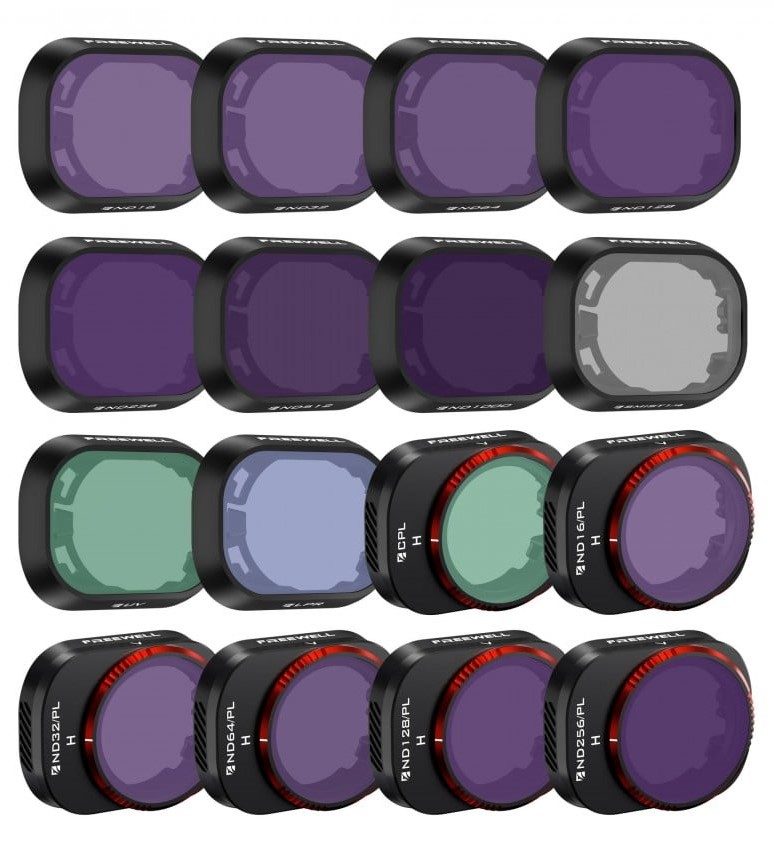
Freewell All Day ND Filter Kit for DJI Mini 4 Pro (6-Pack)
Six ND densities from ND16 to ND1000 in a hard case — the full exposure toolkit for bright-day flying.
DJI Mini 3 Fly More Combo (DJI RC)
Best long-flight combo
The Mini 3 is the quiet value pick of the whole DJI range. It shares the 1/1.3-inch sensor and 4K HDR camera of the more expensive Minis, flies longer on a single battery than any of them — 38 minutes rated — and its rotating gimbal shoots true vertical video without cropping, which matters if your footage ends up on a phone screen. What you give up is obstacle sensing in every direction but down, so it rewards a careful pilot and punishes a careless one. The Fly More Combo adds extra batteries, a charging hub and a carry bag, so you spend more time flying and less time waiting on a charger.
Pros
- Longest flight time here
- True vertical shooting
- Same sensor as the Pro Minis
Cons
- No side/front sensing
- Phone controller in base kit
Key specs
| Flight time | 38 min × 3 batteries |
| Camera | 4K HDR |
| Sensor | 1/1.3-inch CMOS |
| Video | 4K/30fps HDR |
| Range | 10 km |
| Obstacle sensing | Downward only |
| Weight | 249 g |
Our pick
DJI Mini 3 Fly More Combo (DJI RC)
Mini 3 with screen controller, three batteries and bag — 114 minutes of rated flight time in the case.
Pairs well with
SanDisk Extreme 128GB microSDXC
The card most drone pilots actually use: V30-rated for 4K video, fast enough to never drop a frame, 128 GB holds hours of footage.
DJI Mini 2 SE Fly More Combo
Best learner combo
The Mini 2 SE exists for one buyer: someone who wants to learn to fly properly without spending 4K money. It has the same flight controller, wind resistance and GPS return-to-home as its pricier siblings — the only real sacrifice is the camera, which records 2.7K instead of 4K. On a phone screen, honestly, most people will not notice. If your budget is tight and your goal is learning, this is the sensible buy; spend the money you save on a second battery. The Fly More Combo adds extra batteries, a charging hub and a carry bag, so you spend more time flying and less time waiting on a charger.
Pros
- Cheapest DJI with a gimbal
- Same flight feel as pricier Minis
- Great learner drone
Cons
- 2.7K video, not 4K
- No obstacle sensing
Key specs
| Flight time | 31 min × 3 batteries |
| Camera | 2.7K QHD |
| Sensor | 1/2.3-inch CMOS |
| Video | 2.7K/30fps |
| Range | 10 km |
| Obstacle sensing | Downward only |
| Weight | 249 g |
Our pick
DJI Mini 2 SE Fly More Combo
Mini 2 SE with three batteries, charging hub and bag — 93 minutes of practice time per outing.
Pairs well with
PGYTECH Landing Pad (75 cm)
A foldable 75 cm pad with a high-visibility H: clean takeoffs from grass, sand and gravel, and a clear landing target.
DJI Mini 5 Pro Fly More Combo (RC 2)
Best premium kit
The Mini 5 Pro is the most capable small drone DJI has made, and it is also the most forgiving. The 1-inch sensor is a genuine step up in low light — sunset flights and shaded valleys keep detail that smaller sensors smear away — and the omnidirectional sensing plus LiDAR-assisted night obstacle detection give a new pilot a wide safety margin. It is the one pick on this list that a beginner will not outgrow in a season. The Fly More Combo adds extra batteries, a charging hub and a carry bag, so you spend more time flying and less time waiting on a charger.
Pros
- 1-inch sensor, best in class
- Omnidirectional + LiDAR sensing
- ActiveTrack 360° follows well
Cons
- Priciest Mini yet
- Heavier than older Minis
Key specs
| Flight time | 36 min × 3 batteries |
| Camera | 4K HDR |
| Sensor | 1-inch CMOS |
| Video | 4K/60fps |
| Range | 20 km |
| Obstacle sensing | Omnidirectional |
| Weight | 249 g |
Our pick
DJI Mini 5 Pro Fly More Combo (RC 2)
The Mini 5 Pro with the screen controller, three batteries and a charging hub — the full weekend kit in one box.
Pairs well with
SanDisk Extreme 128GB microSDXC
The card most drone pilots actually use: V30-rated for 4K video, fast enough to never drop a frame, 128 GB holds hours of footage.
DJI Avata 2 Fly More Combo (3 Batteries)
Best first FPV
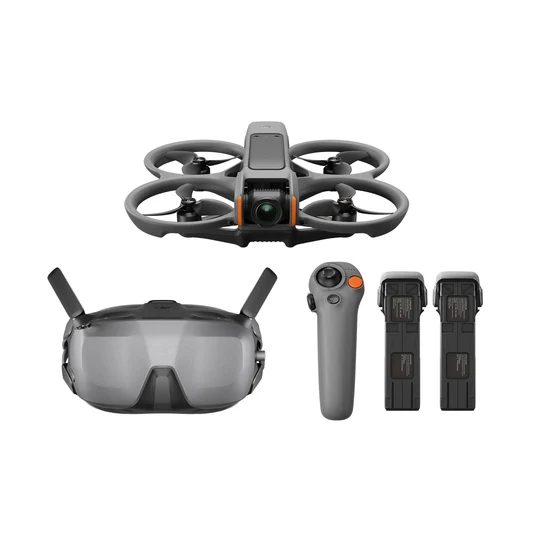
The Avata 2 is the easiest way into FPV, and the only FPV drone here a careful beginner can fly on day one. You wear the goggles, point the motion controller where you want to go, and the drone follows; built-in propeller guards and a tough frame forgive the bumps that would end a DIY quad. The 4K/60 camera with a 155° field of view produces the immersive, dive-through-the-trees footage that defines FPV. It is a different skill from camera drones — closer to flying than filming — and the 23-minute flight time means the three-battery combo is the one to get.
Pros
- Flies FPV on day one
- Goggles + motion control
- Tough, fully guarded
Cons
- Short 23-min flights
- FPV is a separate skill
Key specs
| Flight time | 23 min |
| Camera | 4K/60fps |
| Sensor | 1/1.3-inch CMOS |
| Video | 4K/60fps HDR |
| Range | O4, 13 km |
| Obstacle sensing | Downward + rear |
| Weight | 377 g |
Our pick
DJI Avata 2 Fly More Combo (3 Batteries)
The FPV drone for people who have never flown FPV: goggles, motion controller, prop guards and one-push flips.
Pairs well with
SanDisk Extreme 128GB microSDXC
The card most drone pilots actually use: V30-rated for 4K video, fast enough to never drop a frame, 128 GB holds hours of footage.
Frequently asked questions
What is the best drone for a complete beginner?
The DJI Mini 4 Pro is our top all-round recommendation: omnidirectional obstacle sensing, a screen controller and 4K/60 HDR video in a sub-250 g drone. If your budget is tighter, the DJI Mini 4K gives you the same stable flight experience and a real 3-axis gimbal for much less.
How much should I spend on my first drone?
Most beginners are best served between $250 and $500, where the Mini 4K, Mini 3 and Potensic ATOM 2 sit. Below that you trade away the mechanical gimbal or the camera quality; above it you are paying for sensors and sensing that matter more once you can already fly.
Do I need to register a beginner drone?
It depends on where you fly and how much the drone weighs — rules vary by country and change often. Sub-250 g drones face the lightest requirements in most places, but that is not the same as no rules. Check your national aviation authority's current guidance before your first flight; we do not give legal advice.
Is a Fly More Combo worth it for a beginner?
Usually yes. One battery gives you roughly 20 minutes of real shooting time; three batteries give you an hour. The charging hub and bag are genuinely useful, and buying the batteries later almost always costs more than the combo premium.
What is the difference between the Mini 4K and the Mini 2 SE?
The camera: the Mini 4K records 4K/30 video, the Mini 2 SE tops out at 2.7K. The airframe, flight time and handling are essentially the same. If your videos end up on a phone, the difference is small; on a big screen or cropped in editing, 4K is visibly better.
Can a beginner fly an FPV drone like the Avata 2?
The Avata 2 is the exception: goggles plus a motion controller make it flyable on day one, and the prop guards forgive crashes. Traditional FPV quads with stick controllers are a different skill entirely and need simulator practice first.
Do I need extra accessories on day one?
A fast microSD card (V30 or better) is the only true essential — most drones do not include one. After that, a second battery matters more than any other accessory. ND filters and a landing pad can wait until you know you will keep flying.
Related guides

Best Camera Drones Under $500 (2026)
Twelve camera drones that stay under $500 — plus the three accessories that make a budget kit feel like a pro one.
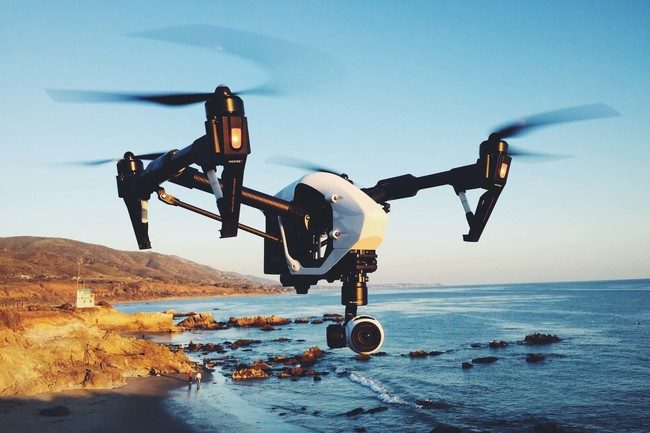
How to Fly a Drone for the First Time (Safely)
A calm, complete walkthrough for flight number one — from the kitchen-table checks to a landing you can be proud of.
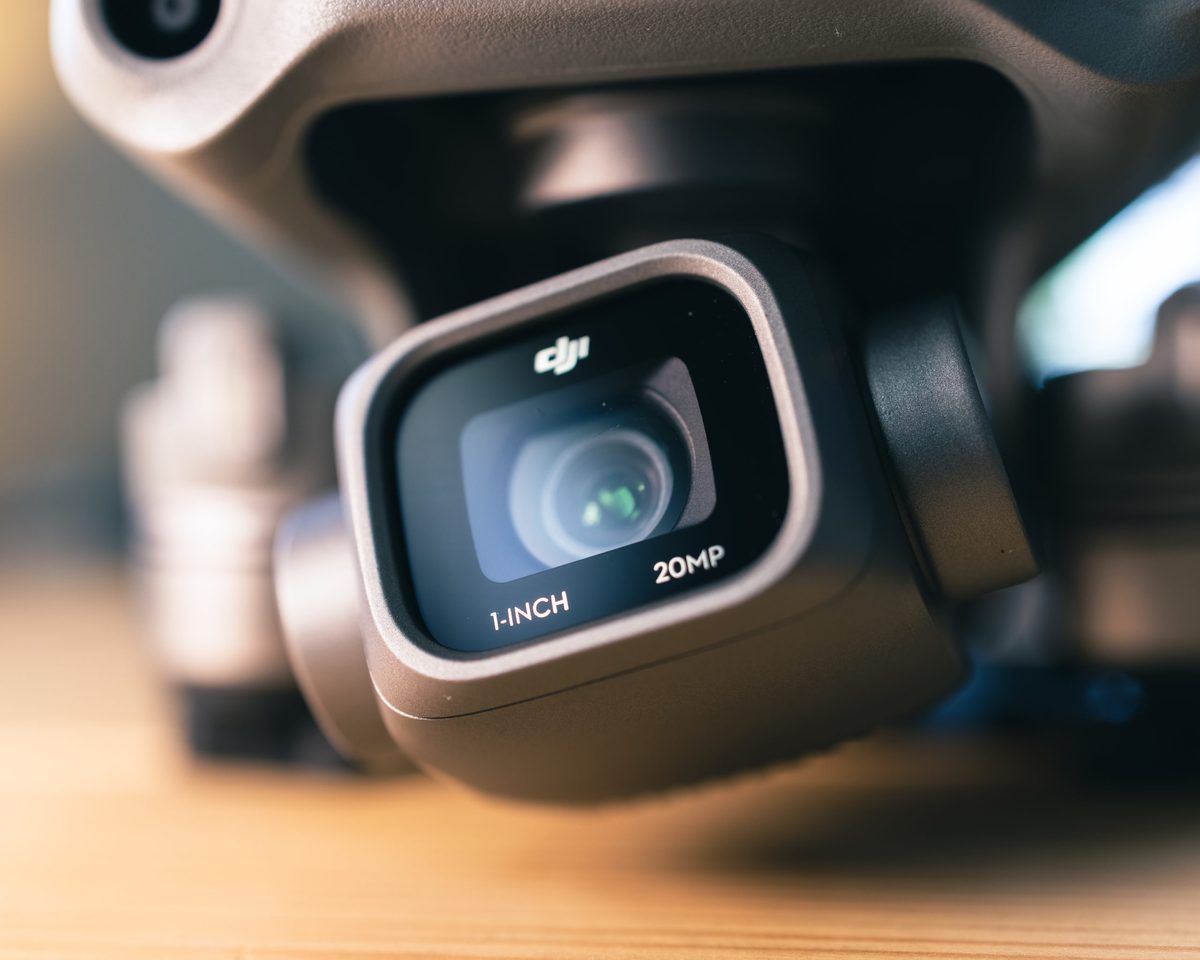
What to Look for in a Drone Camera: Sensor, Gimbal, Resolution
The spec sheet lies by omission. Three numbers decide 90% of your image quality — and megapixels isn't one of them.