Camera drones are flying tripods built for smooth, stable footage; FPV drones are flown through goggles for fast, immersive flying. Choose a camera drone for calm aerial video and photos, and FPV if you want speed, dives and acrobatic flight — and accept more crashes.
Watch an FPV video and a camera-drone video back to back and the difference is obvious in five seconds: one dives through a gap in a forest at 100 km/h, the other glides over a coastline in a slow, cinematic sweep. Both were filmed from the air. They were not filmed by the same kind of machine — or the same kind of pilot.
FPV (first-person view) drones and camera drones are two branches of the same hobby, and beginners often buy the wrong one because the shop listings look similar. This guide lays out the real differences — how they fly, how they crash, what they cost, and which one fits the footage in your head.
The short version
| FPV drone | Camera drone | |
|---|---|---|
| You see | Goggles, first-person view | Phone or controller screen |
| Flying style | Manual, acrobatic, fast | Assisted, stable, GPS-held |
| Video look | Raw, dynamic, close to objects | Smooth, stabilised, cinematic |
| Learning time | Weeks of simulator practice | Flying well in a weekend |
| Crash cost | Parts are cheap, crashes frequent | Crashes are rare, repairs costly |
| Best for | Racing, freestyle, chase footage | Photos, travel video, real estate |
The one-sentence difference
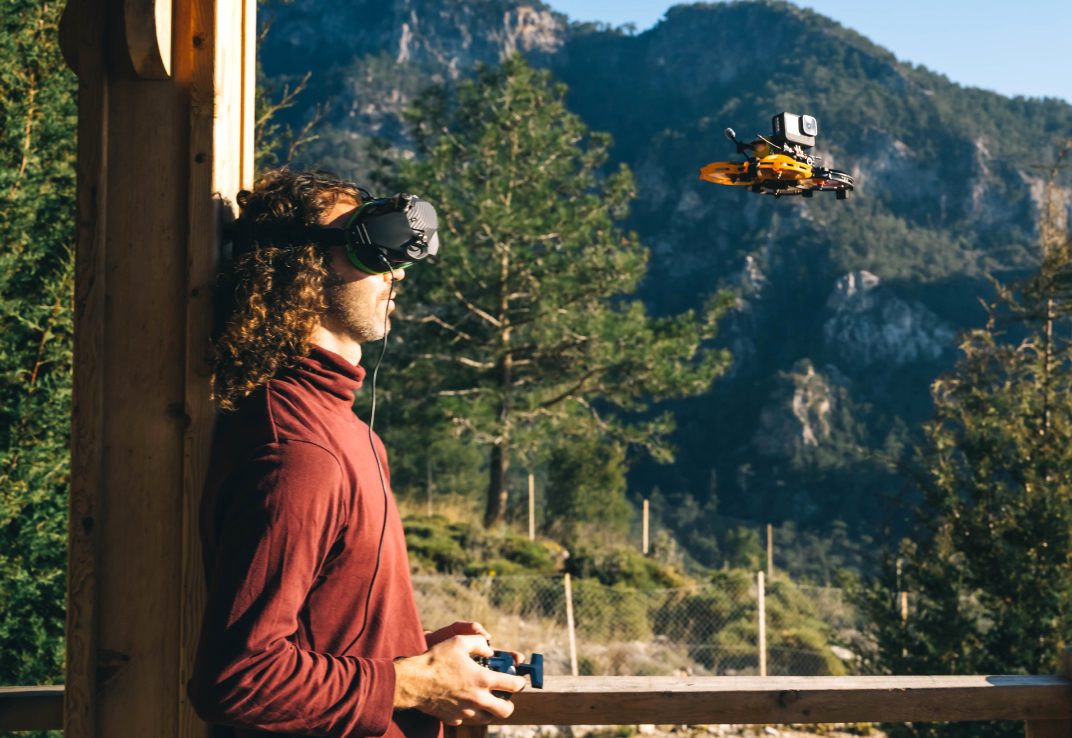
A camera drone is a tripod that flies; an FPV drone is a motorbike that flies. The camera drone's job is to hold still in the sky and make smooth footage easy. The FPV drone's job is to go where the pilot points it, fast, with the pilot seeing what the drone sees through goggles.
That one difference — assisted stability versus direct control — explains almost everything else: the learning curve, the crash rate, the video look, and the price of getting it wrong.
What FPV actually feels like
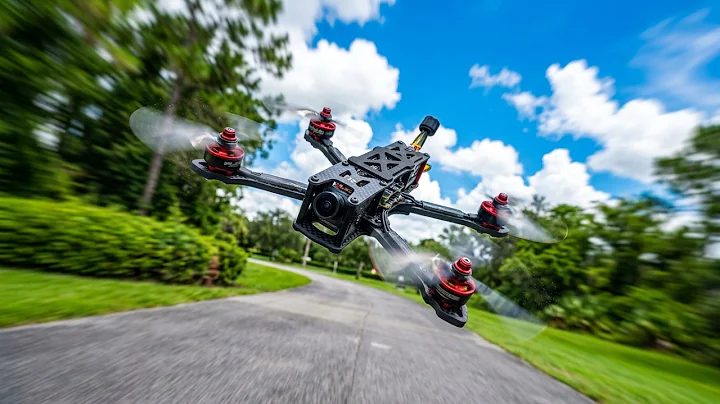
Put the goggles on and you stop being a person holding a controller: you are in the aircraft. The view is low-latency video from the drone's nose camera, and your thumbs steer it like a video game — except the video game is real, the ground is hard, and there is no respawn button.
In manual (acro) mode there is no self-levelling. Release the sticks and the drone keeps its attitude and its momentum. That is what makes flips, rolls and power loops possible, and what makes the first ten hours genuinely hard. Most FPV pilots learn in a simulator first — crashing a virtual drone costs nothing.
What camera drones are for
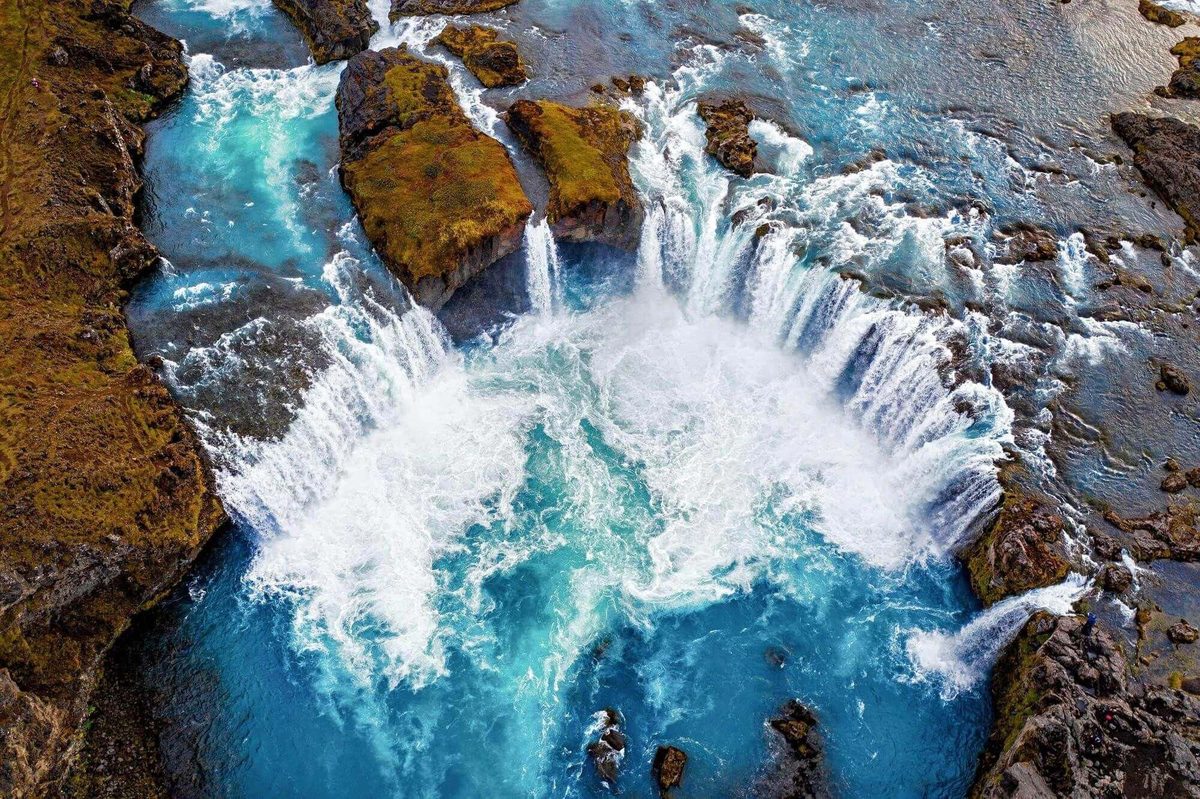
A camera drone exists to make the shot boring to fly and beautiful to watch. GPS holds it in place against the wind, the gimbal irons out every wobble, obstacle sensors stop you hitting the obvious things, and intelligent flight modes — orbit, tracking, waypoint routes — fly the pattern while you frame the shot.
That is why they dominate travel video, real estate, weddings, inspections and landscape photography. The pilot's skill goes into composition and light, not into keeping the aircraft in the air — the aircraft does that itself.
Field of view vs image quality
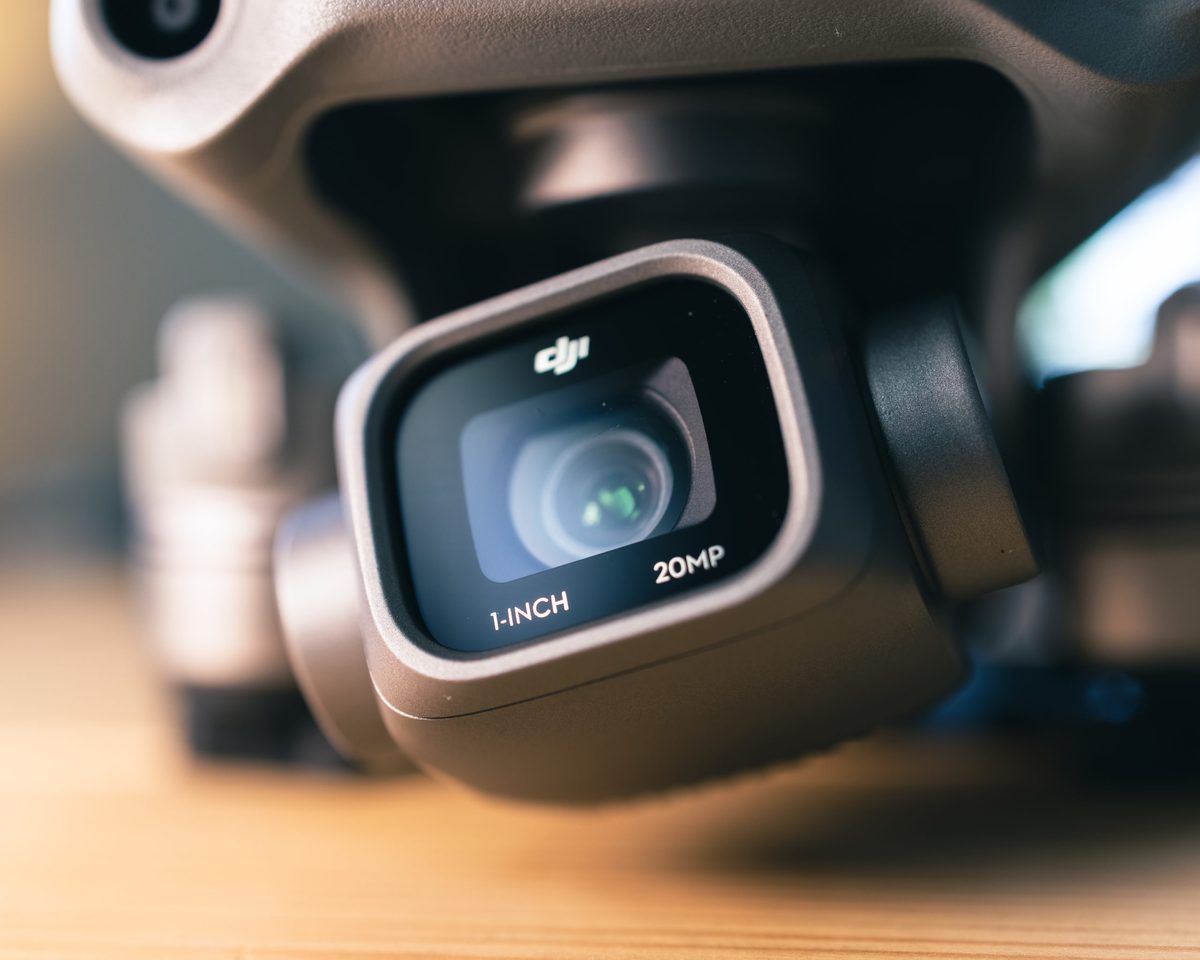
FPV cameras use ultra-wide lenses — 120 to 150 degrees — because speed reads through the edges of the frame. The footage feels fast and immersive, and it also looks distorted, noisy in low light, and shaky unless stabilised in post. Camera drones use narrower lenses on larger sensors with mechanical gimbals: less drama per second, far more image quality per frame.
The crossover is real now: the DJI Avata 2 carries a 1/1.3-inch sensor and shoots 4K/60, and action cameras bolted to freestyle quads produce genuinely good footage. But an FPV camera still exists to serve the flying; a camera drone's camera is the whole point.
The learning curve, honestly
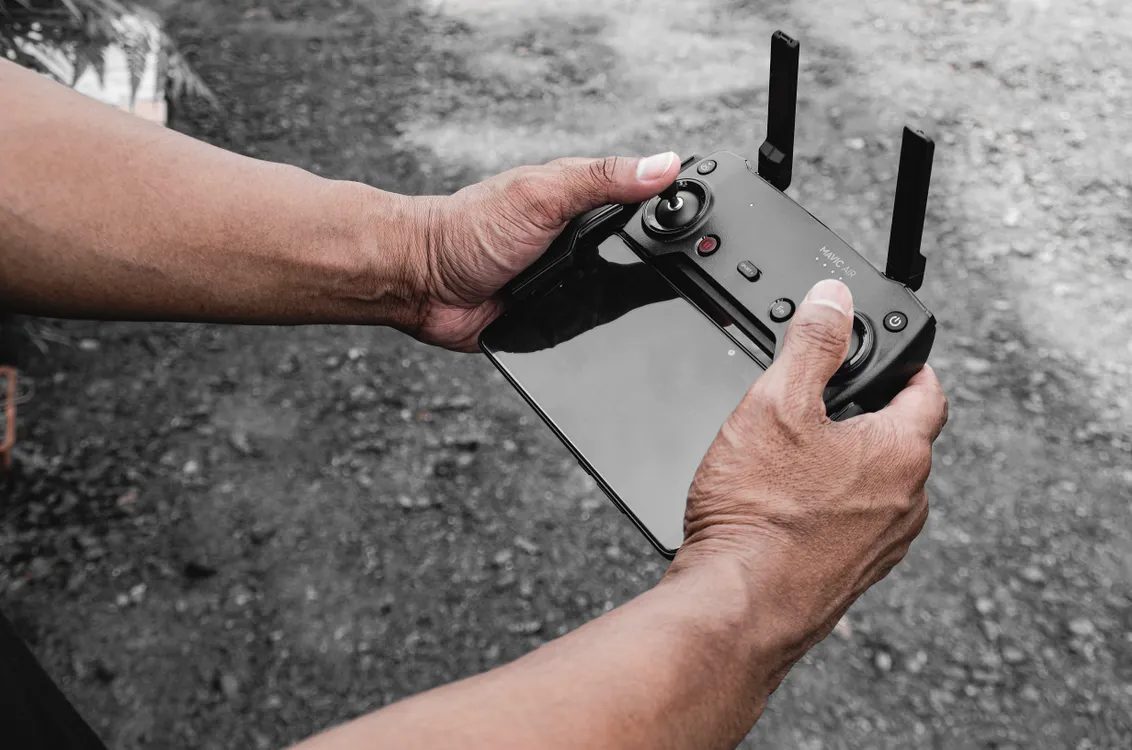
A camera drone teaches itself: most people fly a confident, safe flight within an hour and a good one within a weekend. An FPV drone in manual mode takes 20–40 hours of simulator time before most people can fly a clean lap without crashing, and real-world nerves add another layer on top.
That is not a reason to avoid FPV — it is a reason to budget for it. Buy the simulator before the drone, put in the hours, and your first real flights will be survivable. Skip the simulator and your first flights will be a parts order.
What each one actually costs
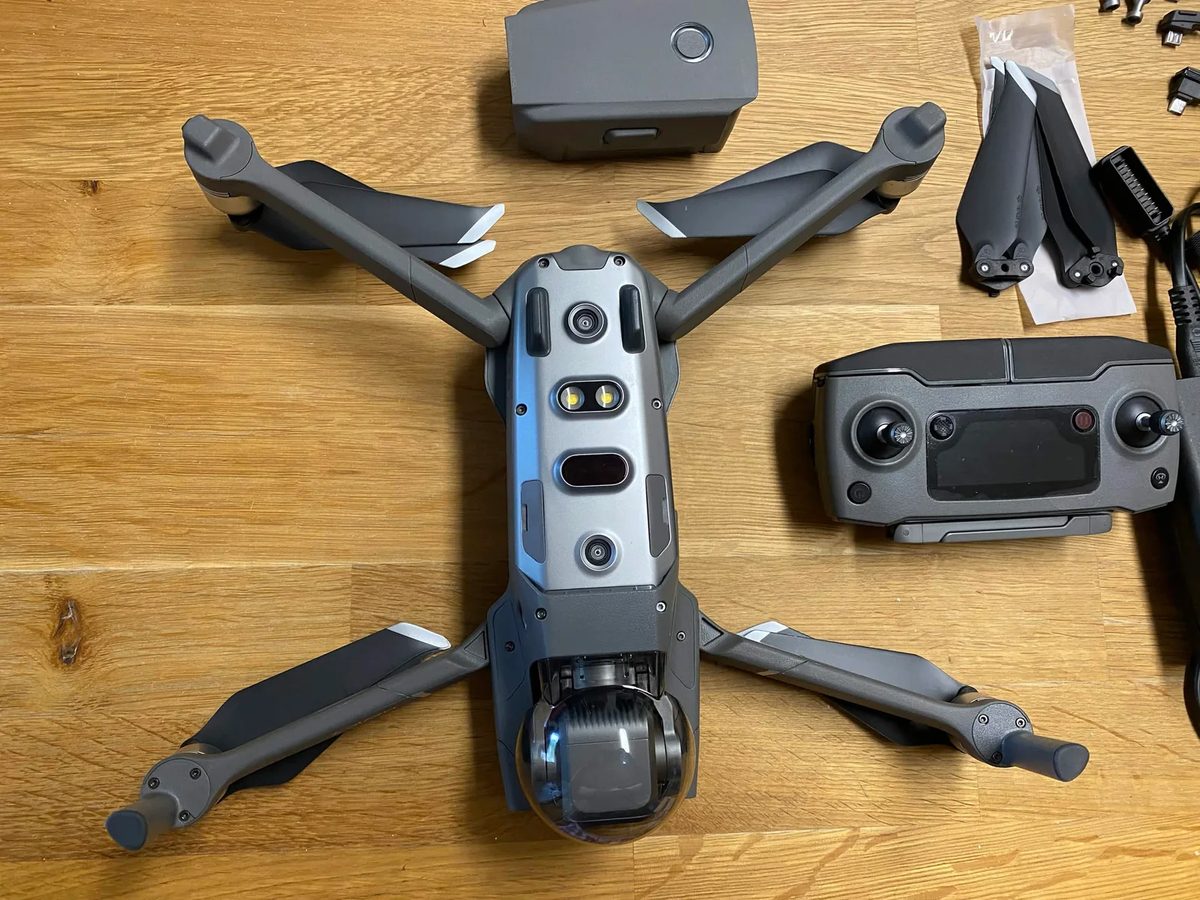
A camera drone is one purchase: drone, controller, battery, charger, done. A starter FPV kit is four purchases — drone, goggles, radio, batteries — plus a charger, a soldering iron, and a shelf of spare props and arms, because you will use them.
Per hour of flying, FPV is cheaper once you are skilled, because parts are inexpensive and you fix the drone yourself. Getting skilled is the expensive part: expect to spend on repairs, replacements, and a simulator before the flying feels free.
Crashes: frequent and cheap vs rare and expensive
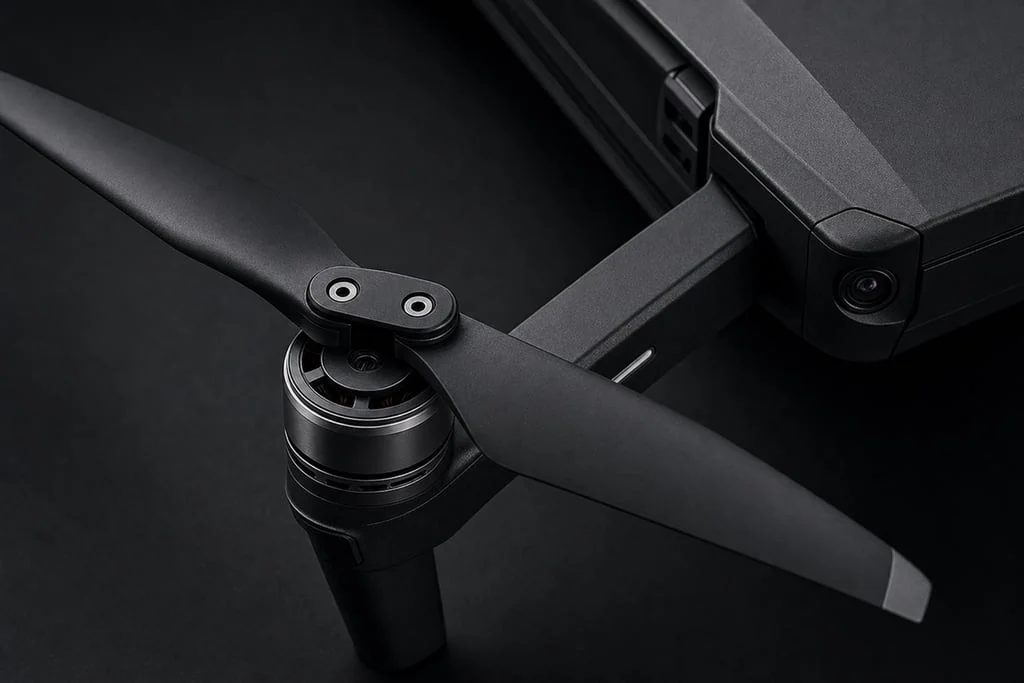
FPV pilots crash constantly, especially while learning — and mostly shrug, because a prop costs a few dollars, an arm a few more, and the drone is built to be rebuilt. The airframe is a consumable; the skill is the investment.
Camera drones crash rarely because the automation prevents most of it — but when one does go down, the repair is a gimbal, a camera module, or a factory service, and the bill can be a third of the drone's price. That is why camera-drone pilots fly conservatively and FPV pilots fly like they mean it.
Use cases: where each one wins
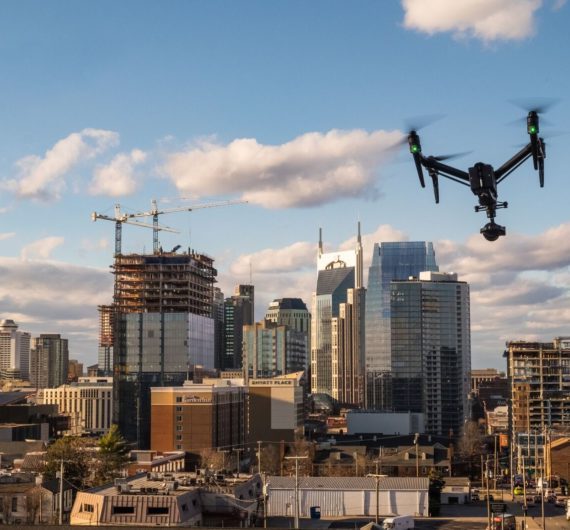
FPV wins anywhere the shot needs speed, proximity, or a route a camera drone cannot fly: chasing a mountain biker through trees, diving a building, threading a gap, racing. Camera drones win anywhere the shot needs stillness, framing, or time: a sunrise over a coastline, a property tour, a wedding establishing shot, a roof inspection.
Notice the overlap is small. If your footage ideas are mostly 'beautiful place, slowly revealed', you want a camera drone. If they are mostly 'fast thing, closely followed', you want FPV — and probably a camera drone later too.
Video styles: what the footage looks like
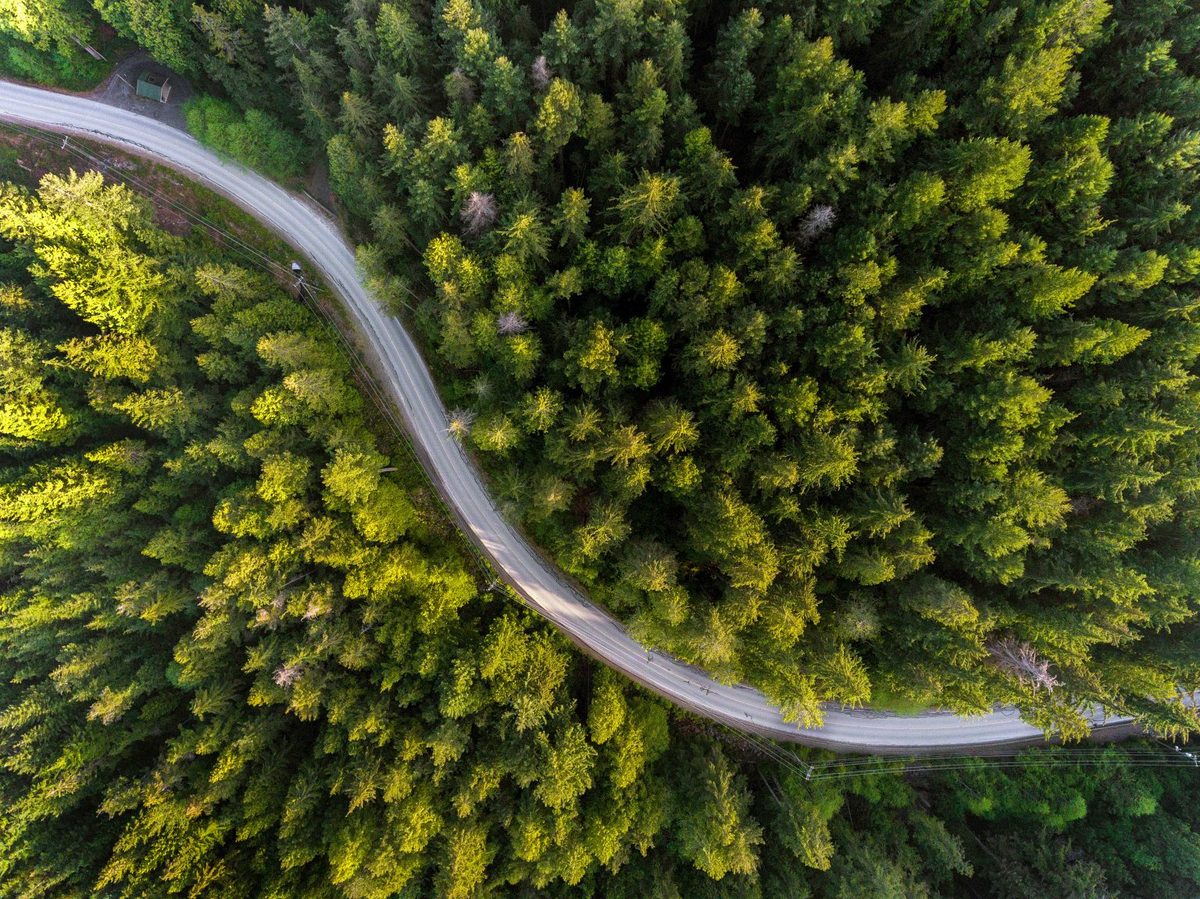
FPV footage is kinetic: the camera is always moving, always close, and the edit is usually cut to music with the motion doing the talking. Camera-drone footage is composed: slow reveals, steady orbits, a horizon held level for the full shot, and the edit lingers on the landscape.
Neither style is better — they answer different questions. FPV asks 'what does it feel like to be there, fast?' Camera drones ask 'what does this place look like from above?' Decide which question you are asking before you buy the machine.
The middle ground: DJI Avata 2
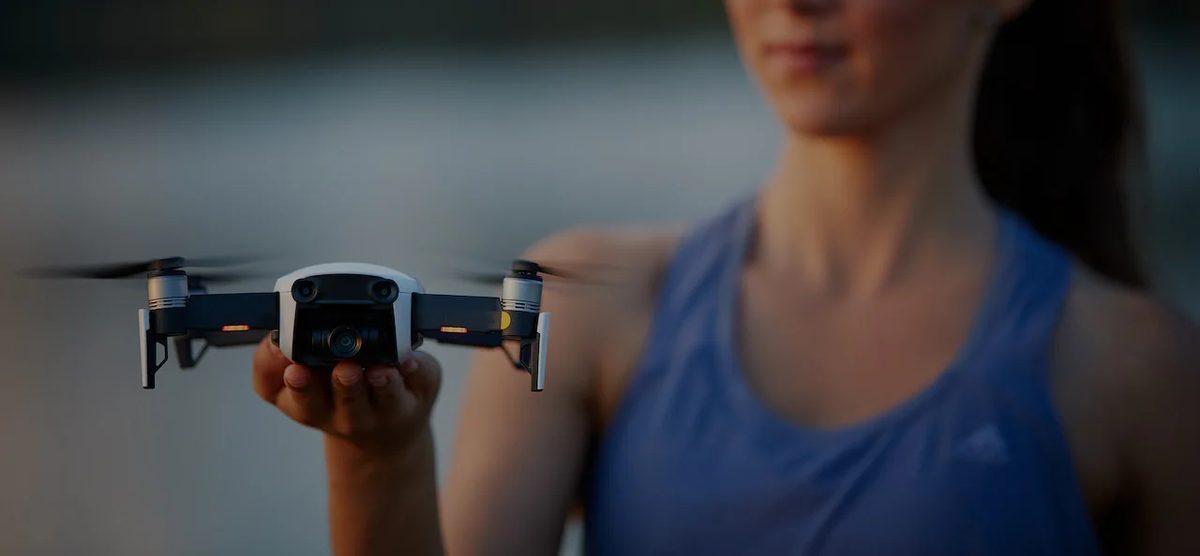
If you want the FPV feeling without the FPV learning curve, the DJI Avata 2 is the honest compromise. It flies with goggles and a motion controller, does flips at the press of a button, has prop guards and obstacle sensing, and still shoots 4K/60 on a 1/1.3-inch sensor.
It is not a freestyle quad — it will not keep up with a custom build in a race, and it will not teach you manual FPV. But for a first taste of immersive flying with a camera that is actually good, nothing else is this easy. Read our beginner guide for where it fits in a first purchase.
Which one should you buy first?
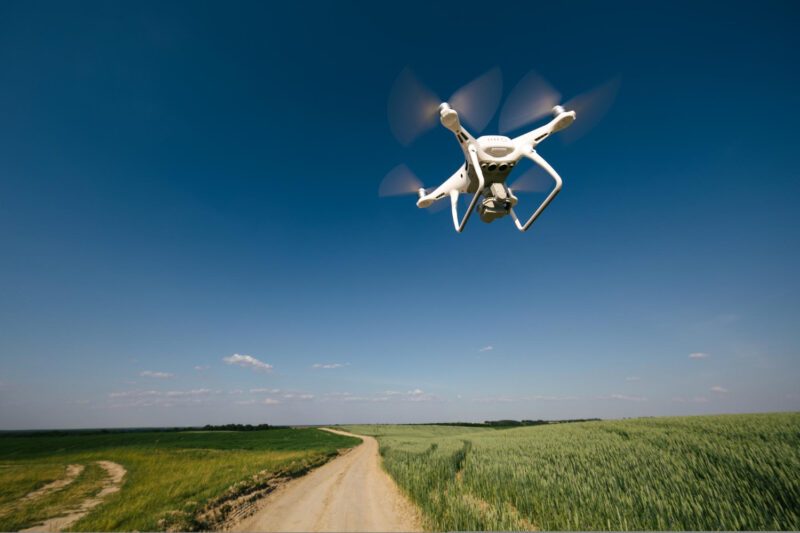
If you are unsure, buy the camera drone first. It teaches you to fly, to frame, and to read light — and the footage is good from day one. Many FPV pilots started exactly this way and came to FPV later, already knowing how to fly.
Buy FPV first only if you already know you want it: you have watched hours of FPV video, you have tried a simulator, and the idea of spending a month learning to fly a lap excites rather than discourages you. That is the right temperament — and it is rarer than the videos make it look.
Can one drone do both?
Almost, but not quite. The Avata 2 is the closest thing to a bridge: FPV flying with a good camera, at the cost of the stability and range a dedicated camera drone gives you. A camera drone with a wide lens and a fast orbit can fake some FPV energy, and an FPV quad with an action camera can fake some cinematic smoothness — but each is a compromise.
Most pilots who stay in the hobby end up with both, and that is fine. Start with the one that matches the footage you want now, and let the second one be a decision you make after a season of flying.
Frequently asked questions
Is FPV harder to fly than a camera drone?
Yes, much harder. A camera drone holds itself steady with GPS and self-levels; an FPV drone in manual mode does neither. Most pilots need 20–40 hours of simulator practice before flying confidently in manual mode.
Do I need goggles to fly FPV?
For the true FPV experience, yes — goggles are what make it first-person view. Some FPV drones can also be flown from a phone screen, but the immersion and the low latency of goggles are the point of the hobby.
Can a camera drone do flips?
No — camera drones are built for stable, level flight and their software prevents acrobatics. The DJI Avata 2 is the exception: it can do flips and rolls at the press of a button while remaining a stabilised, beginner-friendly drone.
Which is better for beginners, FPV or camera drone?
A camera drone, almost always. It is easier to fly, harder to crash, and produces good footage immediately. Start with FPV only if you already know you want the immersive flying experience and are willing to practice in a simulator first.
Is FPV footage better quality than camera drone footage?
Usually not. FPV cameras prioritise low latency and wide fields of view over image quality, while camera drones carry larger sensors and mechanical gimbals. The Avata 2 and action-camera quads narrow the gap considerably.
How much does it cost to get into FPV?
A ready-to-fly FPV kit with goggles and radio typically costs more than a beginner camera drone once you include batteries, a charger and spare parts — and the learning phase adds repair costs. Budget for the full kit, not just the drone.
Can I fly FPV legally?
Rules vary by country and change often — check your local aviation authority before flying, especially around goggles (some places require a visual observer) and registration. This site does not give legal advice; always verify locally.
Related guides
Best Drones for Beginners (2026)
Fifteen beginner drones, ranked on the specs that actually matter for a first flight — with honest trade-offs and no sponsored placements.
What to Look for in a Drone Camera: Sensor, Gimbal, Resolution
The spec sheet lies by omission. Three numbers decide 90% of your image quality — and megapixels isn't one of them.
How to Fly a Drone for the First Time (Safely)
A calm, complete walkthrough for flight number one — from the kitchen-table checks to a landing you can be proud of.